Ballsbridge Lettings Project: Strategic Refurbishment
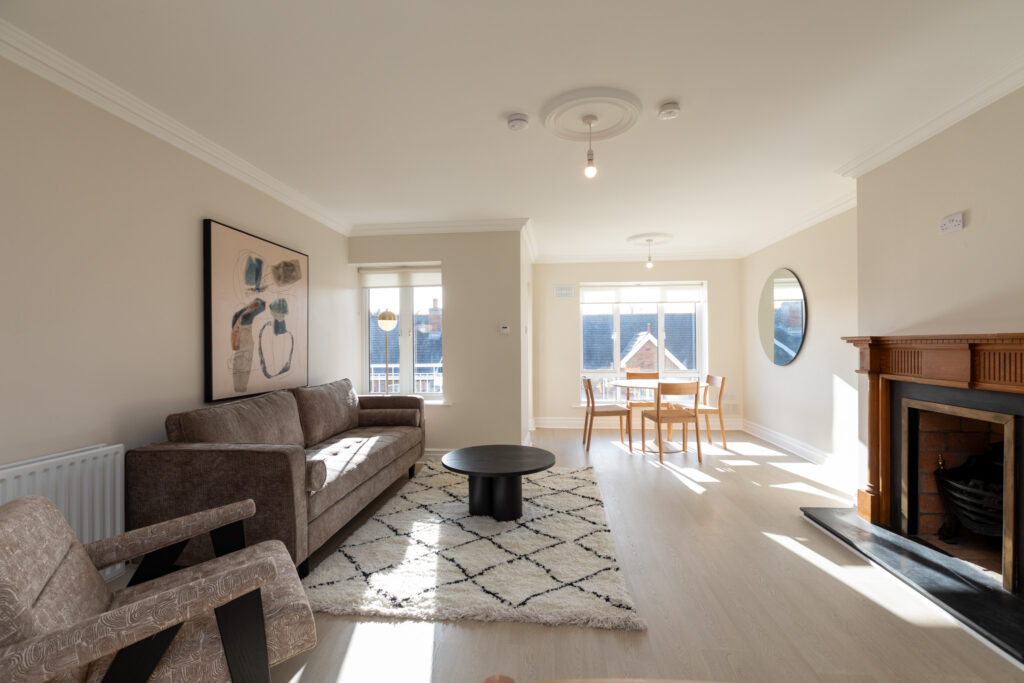
Herbert & Lansdowne was delighted to be chosen as the letting agent to bring this beautiful apartment in Ballsbridge, South Dublin to the market earlier this year.
The Challenge
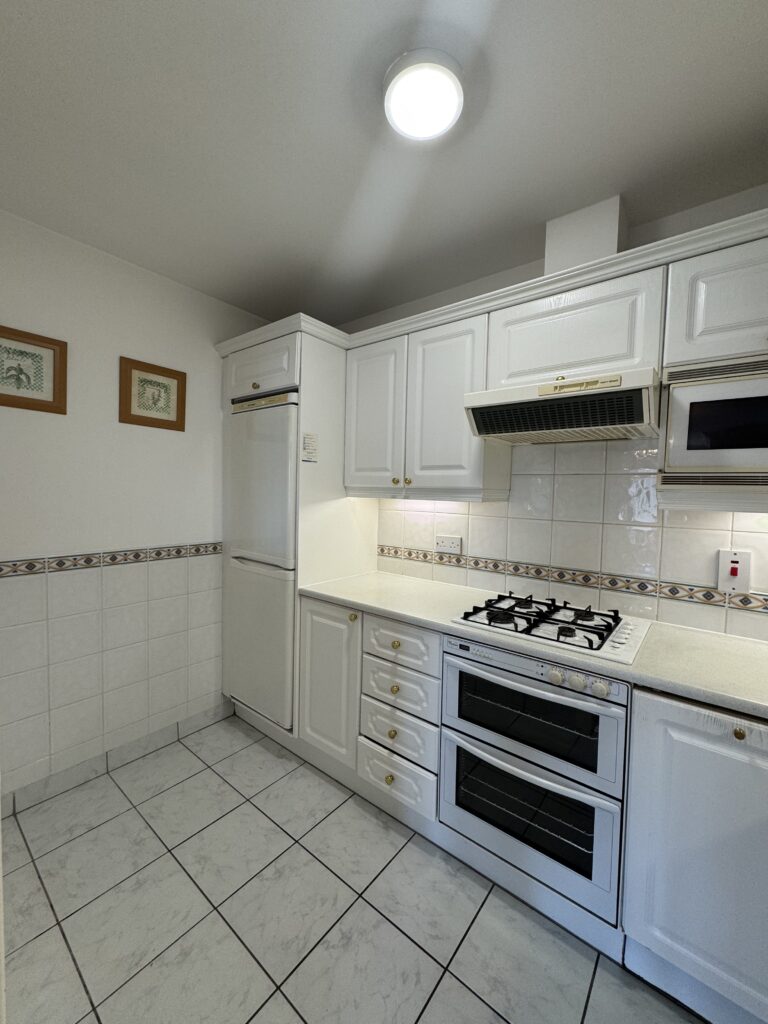
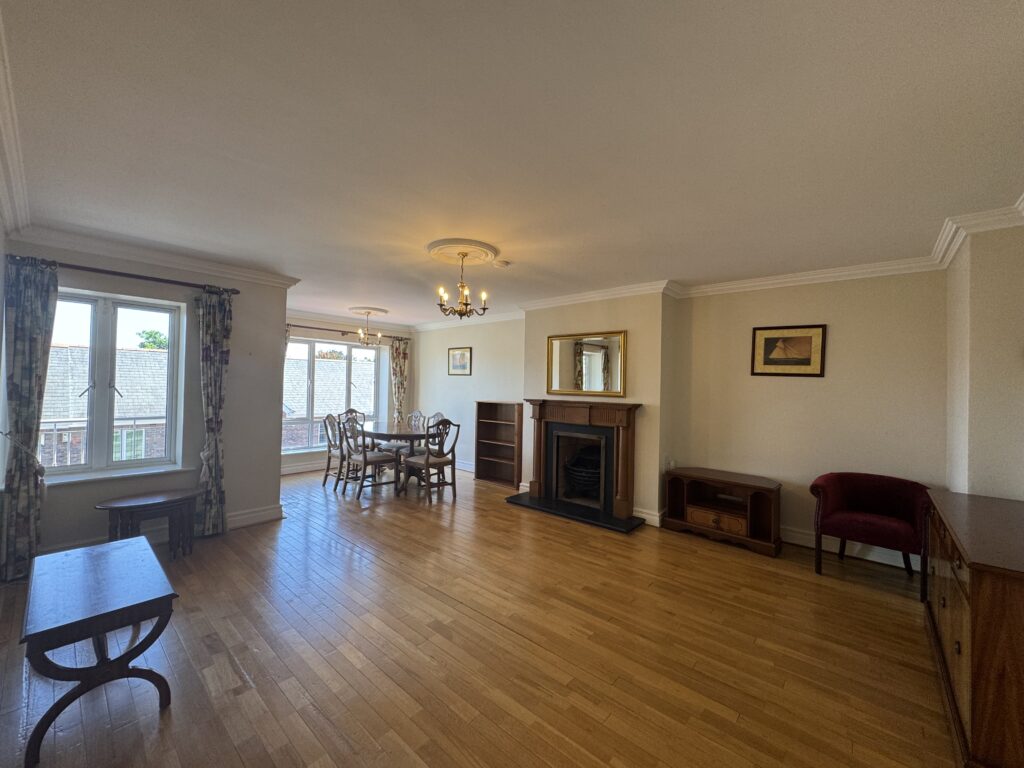
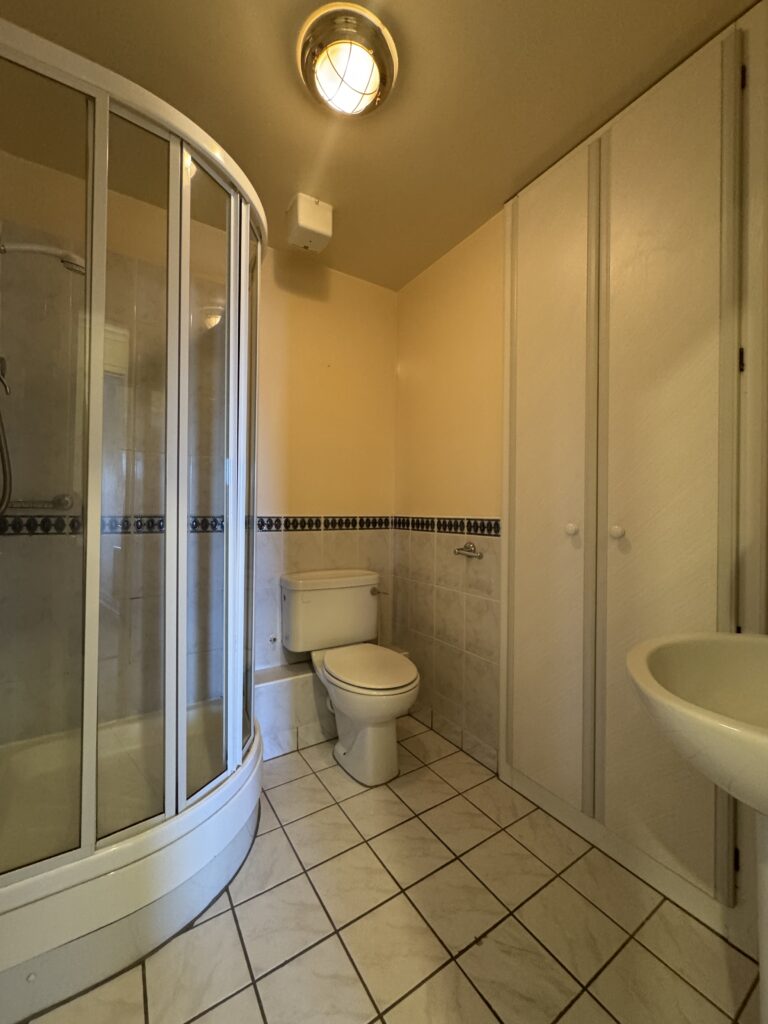
The property was originally built in 1995, and whilst well maintained and previously let, had become dated over time. The Herbert & Lansdowne lettings team carried out a comprehensive review of the property, alongside an assessment of tenant needs and the expectations of today’s rental market.
Our Approach
Based on the review, a full refurbishment plan was recommended to the client to maximise the potential of the property. This included both structural and cosmetic upgrades to deliver a modern, high-quality finish, while carefully preserving the original period features.
An interior designer was also engaged as part of the process, ensuring a cohesive design scheme aligned throughout.
All refurbishment works were delivered by Herbert & Lansdowne’s trusted network of contractors; and managed by the lettings team, removing the hassle for the client.
The Refurbishment Works
As part of the refurbishment, the following renovations were carried out:
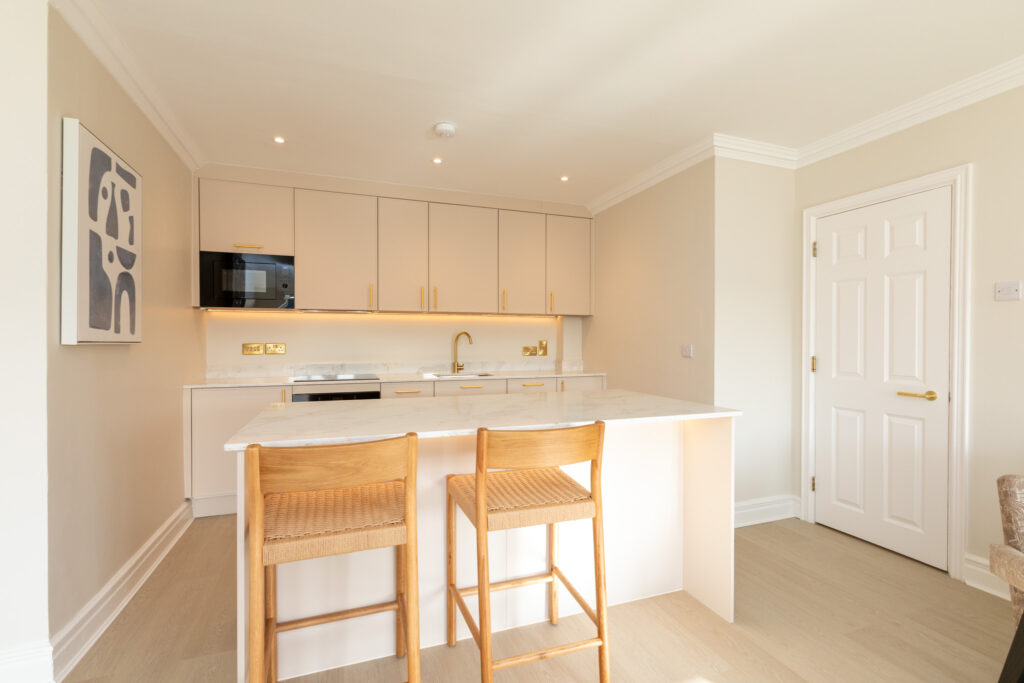
- Reconfiguration of the existing kitchen and dining area to create a larger, open-plan space, designed for modern living and entertaining
- Complete renovation of kitchen, including new island and breakfast bar.
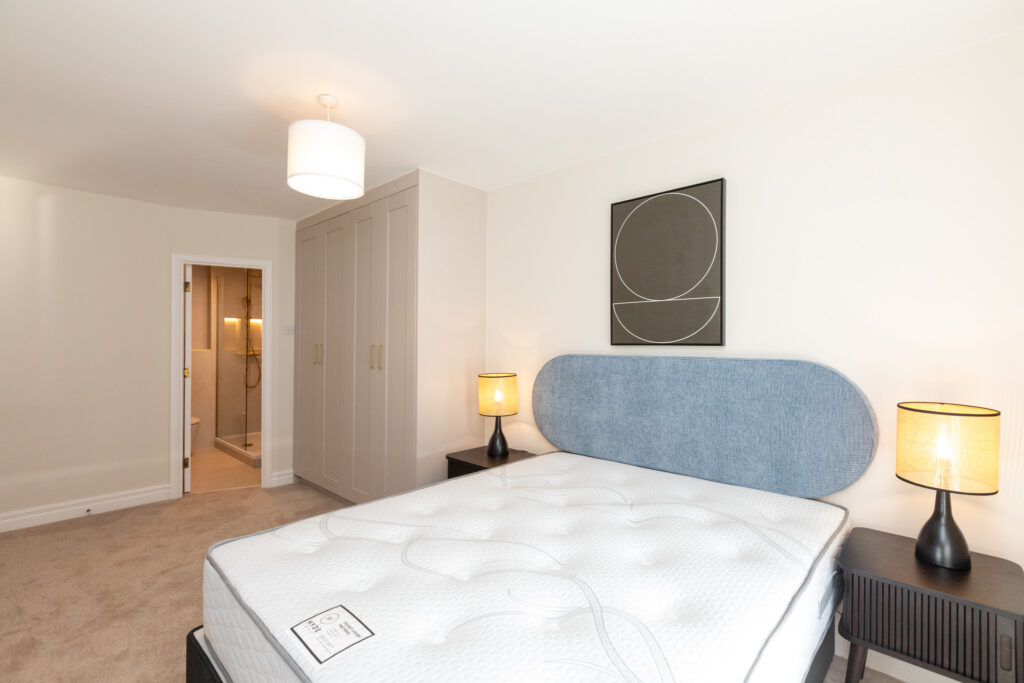
- Replacement of flooring throughout the property to deliver a consistent, high-quality finish.
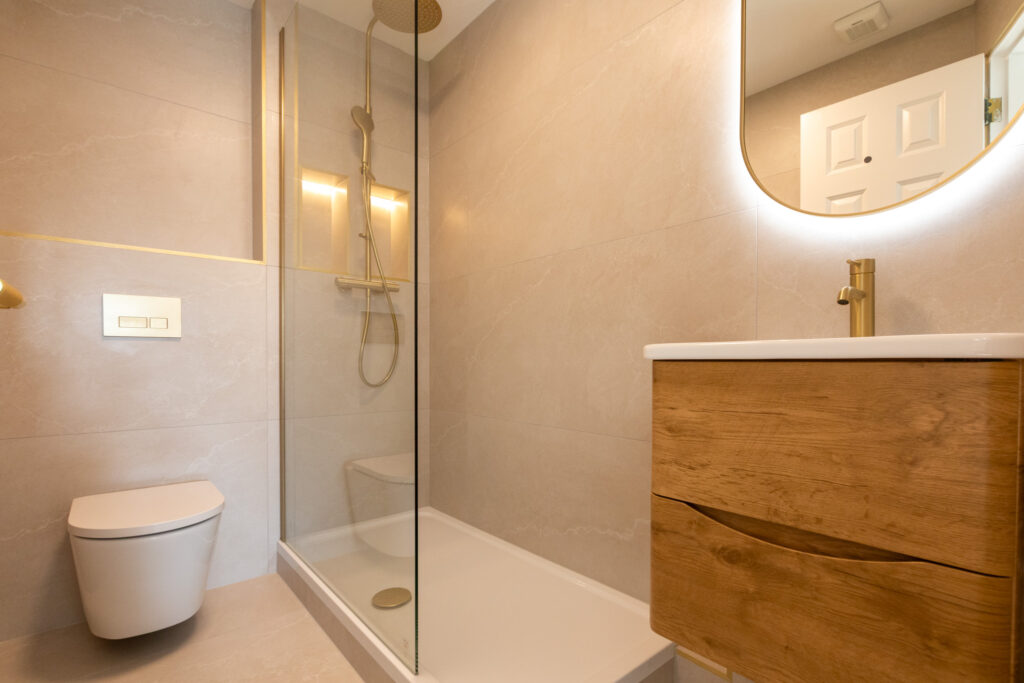
- Remodelling of en-suite bathroom, including replacement of bath with modern shower unit.
- Full repaint throughout, using a modern, neutral colour palette to maximise appeal to prospective tenants.
The Outcome
By modernising the property and improving its overall liveability, the refurbishment increased its appeal within the rental market. This resulted in strong interest from prospective tenants and a subsequent uplift in rental value, reflective of the improved standard of the property.
Looking to improve your property before letting?
Herbert and Lansdowne can assist you with three levels of refurbishment support, depending on your needs:
- Light refresh – decluttering & painting.
- Targeted upgrades.
- Larger structural refurbishment.
Contact our team today for a tailored consultation.
This article is for general information purposes only and does not constitute legal, investment or other advice.
House Price Trends Dublin – Latest Daft.ie Sales Report, Q1 2026
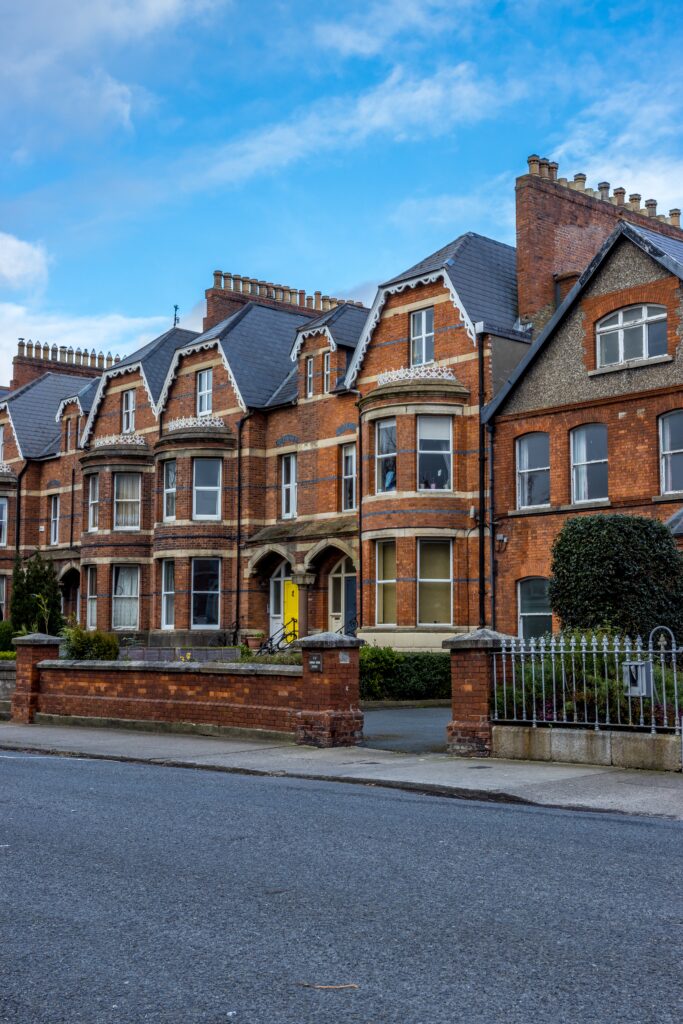
Last week saw the release of the most recent daft.ie sales price report, focused on key house price trends for Q1 2026. Herbert and Lansdowne have compiled the key trends affecting the Dublin property market for you.
Key House Price Trends across the Capital
- According to the latest Daft.ie sales price report, the average list price in Dublin for a 3-bed semi-detached home in the first quarter of 2026 was €626,000. This compares with a list price nationally of €435,000.
- Listed prices of properties across Dublin rose by an average of 2.5% in the year to March 2026. However, according to daft.ie, this represents the slowest rate of increase seen in the city since mid-2023.
- The typical gap between the initial listed price and the ultimate transaction price (known as market heat) in Dublin was 6.9% in Q1 of this year. Nationally this figure was 5.8%.
- On March 1st, there were 3,071 second-hand homes actively for sale in Dublin, which is an increase of 14% on the same date a year previously. However, availability remains below the 2015 – 2019 average of over 4,000.
Dublin – The Key Numbers
Average Listed Prices by Region
| Region | Avg Listed Price |
| Dublin City Centre | €574,000 |
| North Dublin City | €538,000 |
| South Dublin City | €683,000 |
| North Dublin County | €537,000 |
| South Dublin County | €734,000 |
| West Dublin | €464,000 |
Avg listed prices per region based on 3 bed semi-detached property
Source: Daft.ie Sales Report 2026 Q1
Market Area Snapshot
Avg. Listed Price per Property Type – Dublin City Centre
| Property Type | Avg Listed Price |
| 3-bed semi-detached | €574,000 |
| 4-bed semi detached | €873,000 |
| 3-bed terraced | €569,000 |
| 2-bed apartment | €398,000 |
| 3-bed apartment | €488,000 |
Source: Daft.ie Sales Report 2026 Q1
Avg. Listed Price per Property Type – South County Dublin
| Property Type | Avg Listed Price |
| 3-bed semi-detached | €734,000 |
| 4-bed semi detached | €976,000 |
| 4-bed detached | €1.1 m |
| 2-bed apartment | €479,000 |
| 3-bed apartment | €626,000 |
Source: Daft.ie Sales Report 2026 Q1
Herbert & Lansdowne
With deep insight into Dublin’s ever-evolving property landscape, Herbert & Lansdowne provides tailored advice, backed by the latest market trends and insights. Our goal is to ensure our clients stay informed, prepared, and ahead in a fast-moving market.
So whether you’re considering selling or just exploring your options, book a free consultation with our residential team today and learn about our unique approach to getting your property market-ready.
Book a Free Consultation Today.
This article is for general information purposes only and does not constitute legal, investment or other advice.
The Turnkey Premium – Getting Your Home Market-Ready for Selling

Bringing a property to market in turnkey condition can considerably increase your chances of achieving a premium price for your property, attract more interested buyers and ultimately achieve a quick sale.
Many buyers lead busy, high-pressurised lives and hence are looking for a turnkey solution.
So whether it’s a Victorian terrace in Donnybrook, a grand red-brick in Ballsbridge or a coastal family home in Sandymount, view our top tips below to capitalise on the ‘move-in-ready’ premium for your home!
As part of our pre-sales service, Herbert & Lansdowne will carry out an initial audit of your property and provide you with a complete list of recommendations for property upgrades & repairs and can coordinate the entire upgrade project for you thereafter with our trusted list of contractors. This is included at no additional cost to the sale fee. Rest assured if you lead a busy life and simply don’t have the time, we will look after it all.
First Impressions – the ‘Drive-by’ appeal!
Before a buyer even steps through your front door, they have already formed an impression of your home.
Front Door: Ensure your door is freshly painted and consider an impactful high-gloss finish. Update handles and other brassware.
Boundary Hedges and Planting: Neatly-trimmed and well-maintained greenery gives a sense of privacy. Consider planting with seasonal flowers and use structural and specimen plants to create focal points.
The Internal Refresh !
Painting: Freshly painted rooms are immediately inviting to prospective buyers. Choose a colour palette that maximises natural light and creates a sense of open, airy spaces.
Decluttering: A clean, open space feels larger, brighter, and move-in-ready, helping potential buyers picture themselves living there. Streamline each room so it appears functional and has a specific purpose. Remove any broken, damaged or worn furniture.
Skirting: If skirting boards are damaged or chipped, replace damaged sections. Small details really do count when it comes to selling your home.
Flooring: Upgrades to flooring can be an extremely effective way to enhance the value of your home.
Radiators: If your rads are out-dated, swapping them for energy-efficient and modern rads can be a smart move. Additionally, opting for designer radiators gives any room a modern, architectural feel.
Deep clean: A professional deep clean refreshes every room – from skirting boards to bathrooms – leaving your space feeling well cared for. Crystal- clear windows let in more natural light. Sparkling glass inside and out boosts curb appeal.
Lighting: Ensure every light bulb is working and all fittings are in good condition before viewings. Consider replacing old shades with clean, modern ones for a fresh updated look.
Kitchen and Bathroom
Kitchen:
- Remember that first impressions are everything for prospective buyers. Small, tactical upgrades like sleek new cabinet handles or new countertops can transform the room’s energy.
- If cabinets are structurally sound, but out-dated, consider simply respraying.
Bathroom:
The fundamentals: Re-grouting tiling or even replacing tiling, can give a modern, fresh feel to your bathrooms.
The Luxury: To today’s premium buyer, the humble bathroom is no longer merely a functional space – it’s a personal sanctuary—a retreat dedicated to luxury! Strategic investments in bathroom furniture and bespoke finishes can set a sophisticated tone here for the rest your property.
The Invisible Essentials
- Ensure that your gas boiler or other heating system has been recently serviced and that all maintenance is up-to-date.
- Review electrical and plumbing systems also for maintenance requirements.
How We Can Help You?
At Herbert & Lansdowne, we offer an unrivalled, pre-sale concierge service designed to oversee every aspect of preparing your property for sale in the competitive Dublin market.
Our service includes:
- Initial Audit: Bespoke list of recommended strategic upgrades and repairs to enhance the value and appeal of your home.
- Contractor Sourcing: Access to network of trusted contractors.
- Project Management: We oversee every aspect of the project from start to finish.
- Overseas Management: No requirement to be based in Ireland – the ideal solution for clients selling from abroad.
Ready to see what your house could be worth? Contact our specialist residential sales team today!
This article is for general information purposes only and does not constitute legal, investment or other advice.
Residential Rental Market Reforms Ireland 2026 – New Rules for Landlords

From 1st March 2026, the government plans to introduce new legislation in Ireland known as The Residential Tenancies Bill 2026, introducing new rules which will apply to tenancies created on or after 1st March 2026 in Ireland, within the private rental sector.
What key changes are being introduced for new tenancies created on/after 1st March?
- Introduction of rolling 6-year minimum duration tenancies (TMD’s) for tenancies commencing on or after 1st March 2026.
- Mechanism to allow for resetting of rents to market value at the end of each six-year tenancy and in other limited circumstances.
- Annual rent rises will be linked to CPI going forward (cap of 2% will apply).
What about existing tenancies in place prior to 1st March?
The proposed new rules apply to new tenancies created on or after 1st March only –the ‘old rules’ will still apply to existing tenancies in place prior to this date.
What will be the distinction between large and small landlords?
| Category | Classification Under Bill |
Small Landlord | Has 3 or fewer tenancies |
Large Landlord | Has 4 or more tenancies or is a registered company |
What rules will govern the resetting of rents to market value under the new framework?
Rental rates may be reset by landlords to market value in the following circumstances from 1st March 2026:
- A tenant leaves voluntarily or breaches obligations.
- At the end of each 6-year Tenancy of Minimum Duration (TMD).
- Dwelling is no longer suitable to the accommodation needs of the tenant.
How will the new rules affect rental price increases?
- Annual rent increases will be linked to inflation (CPI index).
- A cap of 2% will apply (excluding newly built apartments and student-specific accommodation).
Ending a Tenancy of Minimum Duration (TMD)
The rules governing the termination of a tenancy will differ for small and large landlords under the changes and are summarised below:
Small Landlords – Terminating a TMD
Smaller landlords will be allowed to end a TMD during the six year period in the following circumstances:
- There is a breach of tenant obligations.
- Property no longer suitable.
- Landlord is experiencing financial or other hardship (to be defined by law).
- Landlord or immediate family member need the accommodation to live in.
At the end of each six year term, smaller landlords may end end the tenancy using existing legal grounds, namely:
- Selling the property.
- Substantial refurbishment/renovation.
- Change of use of property.
- Landlord/family member use.
Large Landlords – Terminating a TMD
Under the new rules, large landlords will only be able to terminate a TMD when:
- There is a breach of tenant obligations.
- Property no longer suitable for the tenant.
How can a Tenant end a Tenancy of Minimum Duration (TMD)?
A tenant will be entitled to end a TMD at any time, as long as the correct notice period is given.
At Herbert & Lansdowne, we stay on top of every legislation change, interpret what it means for your property and make sure everything is handled correctly- so you don’t have to spend your time decoding regulations or worrying about costly mistakes.
Let us manage the changes for you. Get in touch with the Herbert and Lansdowne letting department today and enjoy peace of mind knowing your rental property is fully compliant, professionally managed and future-proofed.
Request a callback from our specialist Lettings Team.
This article is for general information purposes only and does not constitute legal, or other advice.
Landlord Insurance – What You Need to Know as a Landlord in Ireland

As a landlord, it is important to carefully consider your insurance needs and to ensure that you have adequate protection in place, both to protect against possible financial loss and strain and to protect your assets and long-term rental investment. Property insurance for landlords in Ireland is generally referred to as ‘Landlord Insurance’.
What is Landlord Insurance
Landlord insurance is a specific type of insurance cover designed for rental properties and landlords. While various policies in the market will differ, many policies will offer certain protection for landlord-specific risks such as loss of rental income (due to an insured event such as fire ) and liability insurance, in addition to protection cover for the property/building itself.
Is Landlord Insurance compulsory in Ireland?
Whilst landlord insurance is not compulsory as of yet in Ireland, certain mortgage providers may require you to have certain cover, such as Buildings Insurance in place, so you should consult your lending institution for specific requirements as a landlord.
What factors should I consider?
It is always wise to consult an insurance or industry professional on your specific insurance requirements, but in general, many landlord insurance policies will entail:
Buildings Cover – protects the structure of your rental property from partial damage or total loss and generally includes fixtures such as kitchen units and bathroom units.
- Before taking out cover, you’ll need to know the rebuild cost of your investment property. Online tools such as the House Rebuild Calculator provided by the Society of Chartered Surveyors Ireland (SCSI) can help you estimate the rebuild cost.
Remember that if you already have home insurance in place on your home but have recently decided to rent out your home or property since your last renewal– don’t forget to notify your insurance provider that you are now renting out the property.
Underinsurance of Residential Properties in Ireland
A key issue for landlords to be aware of when insuring their letting property is the risk of underinsurance. Underinsurance occurs when the sum insured on your insurance policy is less than the rebuild cost of your property. In the event of a claim, having your property uninsured can potentially leave you exposed and liable for a portion of the rebuild or repair costs yourself, from your own funds (depending on the terms and conditions of your policy).
This is because many insurance policies will be subject to what is known as “the average clause,” which allows insurers to reduce the claims amount in proportion to the amount of underinsurance. For a more detailed overview and examples of underinsurance and tips for avoiding, visit our recent blog on The Silent Risk of Underinsurance.
Public Liability Insurance
Many landlords will ensure that they have public liability cover in place to provide protection in the event of a claim from a tenant or member of the public arising in relation to their rental property; and it is important to discuss this aspect of your insurance cover with your provider to make you are satisfied with your level of cover in this regard. Public liability insurance can provide potential cover when accidents occur on your property either to tenants or members of the public.
Apartment Owners & Public Liability Insurance
If you own an apartment property in Ireland, it is important not to assume that public liability cover is included with the Block Policy of the apartment building, as this is often not the case. As mentioned above, you should always query the level of cover in place with your insurance provided (or management company) and satisfy yourself you have adequate cover in place to protect against unforeseen events.
Loss of Rental Income
Certain policies will offer financial protection against loss of rental income if the letting property becomes uninhabitable due to an insured event (e.g. fire), but is often subject to certain policy limits – again it is prudent to discuss these aspects in detail with your provider so that you fully understand the level of cover you have.
Contents Cover
If your rental property is let to the market fully or partially furnished, you may wish to add contents cover to your policy (which is often not included in your policy as standard and is often an optional extra).
- After purchasing new items such as dining toom furniture or sofas, you may need to re-evaluate the level of cover needed from time to time.
- Again, if you own an apartment rental property, Contents Cover will generally be something you need to provide for as a landlord, separate to the block insurance policy already in place for the building.
Benefits of Loss Assessor
In the event that your property suffers damage or total loss, you will have the option to hire a loss assessor to act on your behalf, who will conduct an investigation of the damage and prepare the insurance claim on behalf of you, the policyholder.
- A professional loss assessor is specially trained in this area and can ensure that all aspects of the claim are fully assessed and taken into account, protecting your interests.
- The loss assessor will conduct the negotiations on your behalf directly with the insurance company and act as your representative throughout the claims process.
Being a Landlord can be a rewarding venture, but also entails many legal, compliance and financial considerations, which can feel overwhelming at times. The specialist Property Lettings & Management Team at Herbert and Lansdowne are here to guide and advise you through the process, helping you to protect and maximise value from your investment assets and property portfolio.
Herbert & Lansdowne works extensively with Landlords & investors across the Dublin and Irish property markets and also has deep experience and expertise working with overseas landlords.
This article is for general information purposes only and does not constitute legal, tax, or investment advice.
What to Consider When Choosing an Estate Agent in Dublin

Choosing an estate agent is one of the most important decisions you’ll make when selling your property. In a competitive Dublin market, where demand and sales prices can vary substantially between neighbourhoods, the right estate agent can help you to achieve the best sales price for your property and can help to reduce unnecessary stress from the sales journey.
A typical house sale in Ireland can take between three to six months and even longer at times, so partnering with the right estate agent can make all of the difference.
Although fees are understandably often top of mind for many sellers, there are a number of other factors you should consider when researching prospective estate agents to handle the sale of your home or investment property.

First Things First – Look for a Licensed Agent
Before engaging any property professional, you can first verify that they are licenced to operate in Ireland by checking the official PSRA (Property Services Regulatory Authority) register at https://www.psr.ie/psra-registers/register-of-licensed-property-services-providers/
All Property Services Providers (PSPs), which includes Estate Agents and Auctioneers, operating in the Republic of Ireland must hold a PSRA licence.
Local Knowledge Matters!
Partnering with an agent that has a strong knowledge of your particular area is crucial. It can mean not only a more accurate house valuation at the outset, but also a better understanding of how to effectively market your property throughout the sales process.
It can also potentially mean that you can hit the ground running as your agent may also have a list of potential buyers or a buyer database for your area already on file.
An estate agent with good local knowledge will be well versed on:
- Recent sales and average sales prices for the area – leading to a more accurate valuation for your home or investment property. The initial valuation is an extremely important element, as a valuation that is too high or too low can discourage prospective and otherwise interested buyers.
- Planned retail or transport developments that may enhance an area’s appeal and attractiveness to potential buyers.
- Local amenities such as sports clubs and transport connections that would be of interest to potential buyers.
Don’t be afraid to ask your agent for examples of:
- Previous or recent properties sold by them in your area.
- Examples of past sales which involved properties that are similar to yours – e.g. detached homes, apartments etc.
- Details of specific experience of the Dublin property market.
Look for a Good Rapport and Trust
Given the central role that an estate agent will play in the sale of your property, it’s essential to choose someone you genuinely trust and feel comfortable working with. A good agent will take the time to understand your priorities and goals and demonstrate excellent communication skills from your very first meeting.
Discuss the Marketing Strategy for Your Property
The best agents know that marketing is not just about uploading a listing; it’s about positioning your property effectively in the market and attracting the right buyers for your property. It’s worth having an open conversation with your prospective estate agent before you commit and ask questions such as:
Where exactly will my property be advertised?
Understand the online property portals and social media outlets where your property will be showcased.
How will my property be presented?
Ideally your marketing will include professional photography, floorplans, and well-written descriptions highlighting key selling points for prospective buyers.
Who will conduct negotiations on my behalf throughout the process?
It is important at the outset to be clear on who will conduct sales negotiations on the sale of your home once offers are made by prospective buyers; and if they are a senior negotiator with relevant experience to date. You should satisfy yourself that they have the relevant market experience and skills to effectively negotiate the best sale price on your behalf.
What tips would you suggest for getting my house ready for sale?
There are a number of low-cost, high-impact steps you can take to ensure your home or investment property is presented to the market in its best possible condition an many estate agents will be able to advise you in this area. For more tips on preparing your property for sale, see our recent blog ‘So You Have Decided to Sell’.
Remember that it is your estate agents marketing strategy that will help your property to stand out from similar properties!
Fees
It’s important to fully understand the fees and terms of the agreement with your estate agent and to ask questions about anything of which you are unsure. Compare fees with other providers and ensure you are satisfied that the fees are fair and reasonable.
Remember that an estate agent with the right expertise, skillset and contacts for selling your home may not always be the cheapest provider!
A well-chosen agent will not only secure a better financial result, but also protect your time, peace of mind, and compliance obligations.

How Herbert & Lansdowne can Help
Herbert & Lansdowne are experts in the Dublin property market and have over 20 years’ of experience across a full range of residential and commercial properties and go above and beyond to achieve the best results possible for their clients.
If you would like to get in touch, simply fill out the form on our contact page, give us a call or pop into our city-centre location and one of our experts would be delighted to speak with you about your property.
This article is for general information purposes only and does not constitute legal, tax, or investment advice.
The Silent Risk of Property Under-Insurance

Growing inflation in recent years, particularly within the construction sector, has further contributed to a growing trend of under-insurance within the Irish property sector, and one that has been present for a number of years. A 2022 survey by the Central Bank of Ireland found that under-insurance across the home insurance market in Ireland had grown steadily in the 5-year period evaluated, from 6.5% in 2017 up to 16.5% in 2021.
For homeowners and landlords, under-insurance creates a potential risk of financial loss and financial stress due to potential reduced claim payments, in the event of an insurance claim, following partial or total loss to the property. It can also lead to longer settlement times due to longer negotiations, due to the shortfall in funds required to repair a property.
What is Under-Insurance?
Under-insurance occurs when the sum insured on your insurance policy is less than the rebuild cost of your property.
What is the Impact of Under-Insurance for Irish property owners?
Many insurance policies will be subject to what is known as “the average clause,” which allows insurers to reduce the claims amount in proportion to the amount of under-insurance.
This means that if your property is insured for less than its full reinstatement value, you may be liable for a portion of the rebuild, repair or replacement costs yourself, from your own funds (depending on the terms and conditions of your policy).
Real-Life Example:
A home has a rebuild cost of €400,00 but the insured amount is €300,000 – this means that you are only 75% insured and 25% under-insured.
- In the event of partial damage to the property of €60,000 and subsequent claim to your insurance company, only €45,000 will be paid out.
- In the event of total loss to your property, the maximum that would be paid out to you in the event of a claim would be €300,000 (as this is the amount the property has been insured for).
Causes of Under-Insurance
Underinsurance can be caused by a number of reasons:
- Miscalculation of the rebuild or replacement cost.
- No cover adjustment following property upgrades.
- External factors such as rising material and construction labour costs.

Tips for Avoiding Under-Insurance for Property Owners
Calculate the Full Rebuild Costs of your Property
- To ensure adequate insurance coverage for your home or rental property, it is vital to conduct a comprehensive evaluation of the full rebuild cost of your property (as distinct from the market value of your property).
- Online tools such as the House Rebuild Calculator provided by the Society of Chartered Surveyors Ireland (SCSI) can help you estimate the rebuild cost.
- The rebuild cost should ideally include all relevant costs associated with the rebuild journey of your property, including architect’s fees and other professional fees, demolition fees etc., in addition to the actual construction and material costs of the rebuild itself.
- If you have built-in kitchen units or wardrobes or fittings that are higher than ‘average-spec’, you must factor this into your rebuild cost estimate also.
Consider Obtaining a Professional Valuation
It is often prudent to obtain a professional valuation by a qualified chartered surveyor (RCA), especially for more bespoke or unique builds.
Review your Cover after any Changes or Upgrades to the Property
- If you carry out upgrades to your property such as new rooms or an extension, it is important to review your level of cover at this point to avoid under-insurance.
- Review rebuild costs through the calculator before each insurance policy renewal.
Don’t Neglect your Contents Cover
- You should also review your level of contents cover on a regular basis and ensure you have sufficient cover for items to be replaced as new.
- After purchasing new items such as laptops or home office equipment, you may need to reevaluate the level of cover needed.
Review your Policy Regularly
- Finally, it is always wise to review your level of insurance cover (both buildings and contents) on a regular basis, ideally on an annual basis, particularly during inflationary periods when rebuild costs are rising.
- Discuss inflation protection options such as policy index-linking with your insurance provider to ensure you have adequate built-in protections against inflation where possible.
For more information or to discuss your specific requirements, please reach out to the Herbert & Lansdowne team directly, who would be happy to assist.
This article is for general information purposes only and does not constitute legal, tax, or investment advice.
Irish House Prices Continue to Rise, But Inflation Growth Shows Signs of Easing – Latest Daft.ie House Price Report, Q3 2025
According to the latest published Daft.ie House Price Report, the average asking price for a home rose by 5.9% between July and September this year, when compared to the same period last year. This means that the national average listed sale price of a three-bed semi-detached property in Q3 was €421,261 (daft.ie).
However, it is also clear from the report that house price inflation is showing signs of easing, with the report noting that Q3 list price inflation represents a slight moderation on the rate of inflation seen earlier this year on asking prices – of 7.5%.
This indicates that while house prices in Ireland are still increasing, the rate of growth is beginning to ease slightly.
Dublin Residential Property Market
- In Dublin, list prices rose by 4.5% year-on-year during Q3. The average list price for a three-bed semi-detached home in the capital now stands at €612,824, compared to the national average of €421,261, according to the Daft.ie Q3 House Price Report.
- Listed sale prices in Dublin are now 27% above their pre-covid levels and 8% below their Celtic Tiger peak (Daft.ie).
Housing Supply – Dublin
- On 1st September, there were close to 3,400 second-hand homes actively for sale in Dublin, up 8% on the same date a year previously – however, availability is still 15% below the 2015 – 2019 average (Daft.ie).
Gap Between List Price and Sale Price
A notable continuing trend in the market, highlighted by the Daft.ie report, is the gap between initial property list prices and transaction prices.
- Nationally, the typical property sold in Q3 went for 7% more than its initial listed price.
- However, the gap in Q3 was most notable in Dublin, with an 8.5% gap between initial listed price and ultimate transaction price during the period (Daft.ie).
Herbert & Lansdowne believe the report highlights a housing market still characterised by strong demand and supply constraints — both in Dublin and across the rest of the country.
If you’re considering selling or letting your property, Herbert & Lansdowne can provide tailored advice grounded in years of local expertise of the Dublin property market. Their team combines in-depth market knowledge with strategic insight to help clients achieve the best possible outcomes — whether preparing a home for sale, letting a property, or planning your next move.
This article is for general information purposes only and does not constitute legal, tax, or investment advice.
So you have decided to sell.
Herbert Lansdowne is a leading provider of professional property services in Ireland. With over 20 years of experience, we are dedicated to helping our clients navigate the complex and ever-changing landscape of the property market. Whether you are looking to buy, sell, or rent, our team of experts is here to guide you every step of the way.
So, you’ve decided to sell your property? Congratulations! This is an exciting time, but it can also be a little overwhelming. There are many things to consider, from valuing your property to finding a good solicitor, preparing your property for sale, and even making sure that your land registry maps are up-to-date.
To help you get started, we’ve put together a guide to some of the most important things you need to know before you put your property on the market.
First and foremost, it is important to have a good understanding of the value of your property. You can do this by getting a professional valuation or by using the property price register which is an incredibly useful resource and will give you a sense of at what level you can expect to sell your property at.
Next, you’ll need to find a solicitor to help you navigate the legal aspects of selling your property. This person will be able to advise you on all the necessary documentation, including contracts and transfer of ownership. It is possible that you may encounter unforeseen issues at this point, in some instances with title deeds or depending on the age of the property some more complex challenges around boundary walls etc. All of this can be resolved with the help of a strong solicitor and advice from an established estate agent.
Once you’ve taken care of the legalities, it’s time to focus on preparing your property for sale. This includes cleaning and decluttering your space, making any necessary repairs, and making sure that your home is presented in the best possible light. Buyers are becoming more sophisticated and will be more stringent in assessing your home than was the case years ago, its important to ensure you have dotted all the I’s and crossed all the t’s. Don’t overlook the basics like a fully functioning boiler or immersion, these are the first port of call for most surveyors. Here is a link to the Society of Chartered Surveyors Ireland, they have some other hints and tips to ensure your home is best set up for an potential survey.
Finally, it’s important to check that your land registry maps are up-to-date. This will ensure that there are no issues when it comes to transferring ownership of your property.
In conclusion, selling your property can be a complex process, but with the right preparation and support, it can also be a smooth and enjoyable experience. At Herbert Lansdowne, we are here to help you every step of the way. If you’re ready to get started, simply fill out the form on our website here or give us a call, and one of our experts will be in touch to guide you through the process.
A Guide to the Minimum Standards
When you become a landlord in Ireland there is a list of minimum standards for residential rented accommodation, set out by the Residential Tenancies Board (RTB), that you must comply with.
As a landlord, you have a responsibility for meeting these minimum standards, and keeping up to date with the ever-changing minimum standards and legislation.
Property Condition and Facilities to Include
Before moving any tenant into your property, you must ensure your property meets the minimum standards required and is adequately equipped to ensure safety, comfort, and compliance.
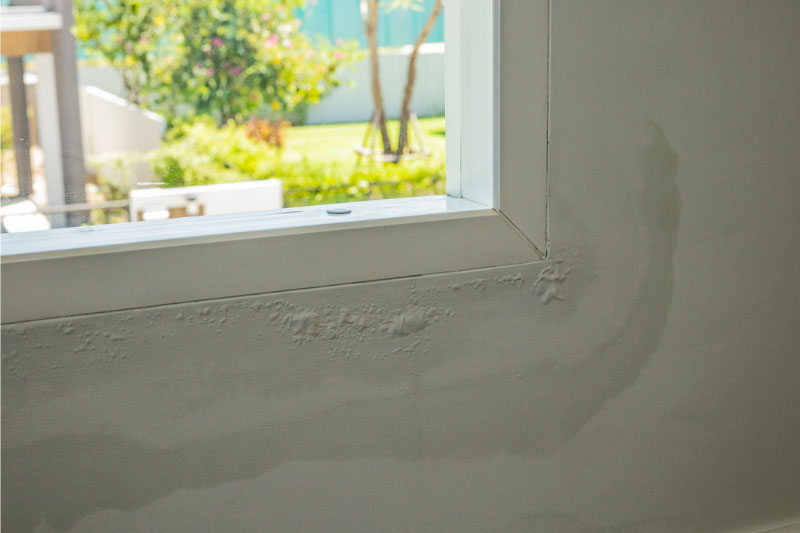
- Your property must be free from damp and in good structural repair.
- You must have hot and cold running water available.
- Adequate ventilation and heating which the tenant can control.
- Where the heating is provided by the landlord, you must also provide a wall mounted heater in each room, that can be controlled by the tenant.
- All appliances should be in good and safe working order.
- A microwave, 4 ring hob and adequate fridge/ freezer (Ice box is not sufficient) must be provided.
- Adequate storage presses for food and cleaning materials.
- All electrical wiring, gas and water pipes should be in a good condition.
- Sufficient 10-year battery smoke alarms should be provided.
- A 10-year battery C02 alarm should be installed in any room with a gas appliance or boiler.
- All properties must have a fire blanket.
- If your property is in a multi-unit building, then you must include a fire detection device, alarm system, an emergency evacuation plan, a fire safety plan and emergency lighting in common areas.
- Front and rear doors should be fitted with a thumb turn locks to prevent being trapped inside in the event of a fire.
- You must provide access to washing and drying facilities, weather self-contained or communal.
- If your property has no outdoor space to dry clothes, you must provide a dryer.
- All habitable rooms should have natural light or adequate artificial light where it is not possible to supply natural light.
- Window restrictors must be applied to all windows that are located above 1400mm from ground level in order to prevent falls.
- All bathrooms should be provided with a working heater and adequate ventilation.
- Tenants should be given access to information on the property, building services, appliances and their maintenance requirements.
- Prevention against the infestation of vermin and pests should be undertaken and maintained.
- There should be adequate access to refuse storage facilities.
Repairs and Inspection
It is recommended by the RTB that landlords or their property manager carry out regular inspections throughout the tenancy. This is important to ensure any unreported maintenance is brought to light, tenants are fulfilling their obligations and to ensure the property is in a good and safe state of repair.
Reasonable notice should be given to all tenants before a landlord enters a property. A mutually agreeable time should be agreed in advance.
Breach of Minimum Standards for Rented Residential Accommodation
When a tenant believes that the property they are renting does not comply with the minimum standards listed above, they should first notify their landlord in writing. A reasonable time period must be given to the landlord to rectify the issue and reasonable access to the property should be allowed to make any repairs, changes or replacements.
If the issue is not resolved, tenants can then contact their local authority who are responsible for enforcing such standards in residential properties. If required, the local authority will then carry out an inspection of the property.
To avoid such issues occurring, it is a good idea to keep-up to date with any changes to the minimum standards through your estate agent or our own research.
How can a Property Management Company help?
The list of minimum standards is long and can often leave landlords doubting their efforts and wondering if they have met all the requirements adequately. Some stipulations can leave the landlord guessing whether they have fitted particular safety devices correctly and if they have supplied the tenant with the best standard of safety equipment possible. It is easy to unknowingly become non compliant, serve an invalid notice or rent increase to a tenant.
A good way to alleviate any worries is to work with a property management company who can take responsibility for all of the above and much more.
At Herbert and Lansdowne, we work with landlords every day and use our wealth of experience to free up your time and take the pressure off by ensuring all minimum standard requirements are met, mid tenancy inspections are complete, repairs are complete in a timely manner, and we even have a 24-hour emergency maintenance team to deal with any leaks, fires, break ins and emergencies outside of normal hours.
3 Month Free Property Management Trial
We are offering a 3-month free trial to all landlords that would like to test drive the management service. Along with the above, there are a lot of additional aspects to the service – point of contact for tenants, arranging maintenance, key holding service, photographic inspection reports, and rent collection service to mention but a few.
Property Management Fees are Tax Deductible
The cost of our management service is 6% of the monthly rent plus VAT at 23%. Based on a rent of €1500 plus vat, this would work out at €90 plus vat per month. This is a fully tax-deductible expense and one of the best investments you can make in your rental property. We will ensure that maintenance is complete at competitive rates, rent increases are complete where possible and any tenant issues are dealt with as efficiently and effectively as possible, ensuring your asset is performing to the best of its ability.
Having your property professionally managed will ensure that you and your property are meeting all the requirements, your asset is performing to the highest level and most importantly that you do not have the stress or worry wondering if you have done everything required of you.
Call Alan McMurray today on (01) 5329000 or email alan@herbertlansdowne.ie to discuss our property management service. Bespoke management packages can be arranged to suit your needs.
Pagespeed Optimization by Lighthouse.

Book a Valuation
Property Alerts
Property Staging
Property Refurbishment
Buyer Agent
Blog
About Us
Contact Us